Sunday, July 21, 2013

How America eats not in step with healthy weight principles


JULY 19, 2013
How we eat in America does not seem to be stacking up with how we should be eating. This should come as no surprise as we continue to see a rise in overweight, obesity, and chronic diseases including type 2 diabetes and heart disease. A new look at a large data base of food behaviors in the US (National health and Nutrition Examination Survey or NHANES) sheds some light on several areas where we can make some improvements.
 1. Snacking on the rise.
There is an overall increase in snacking in the US, with calories from in-between meals increasing from 12% of total calories to 24% of total calories from the 1970’s until today. 56% of Americans eat 3 or more snacks per day. Spacing your calories out throughout the day can be a good thing and help keep hunger down and blood sugar at a more even keel. However, if you are eating snacks on the run and grazing while doing other tasks you may be MINDLESSLY eating more calories than you need. Regardless of whether you eat 3 meals a day or 3 smaller meals and a few snacks, make sure you approach each eating occasion MINDFULLY without distraction.
2. Skipping lunch.
The number of Americans eating breakfast has increased. However, the number of Americans skipping lunch has increased with 20% skipping the mid-day meal. Skipping meals is not a recipe for achieving and maintaining a healthy weight. Skipping meals has been shown to increase the number of calories consumed at the next meal even more than the calories you would have consumed in the meal you missed.
3. Decrease in vegetable consumption.
Since the 1970’s fruit consumption has remained constant while vegetable consumption has declined. 25% of Americans eat ZERO fruits or vegetables each day. Eating more low calorie vegetables is always the first thing I recommend to someone wanting to improve their diet for whatever reason – especially if their goal is to achieve and maintain a healthy weight.
We can take some very simple tips from this new look at how Americans eat.
  • Be MINDFUL of each eating occasion.
  • Don’t skip meals.
  • Eat more fruits and vegetables.


Friday, July 5, 2013

Rains sends pests heading to high ground

The recent heavy rainfall across much of the state will force a lot of common pests (and a few unusual ones) out of their typical  habitats and also contribute to surges in populations of others.


Millipedes - 


Millipedes continue to gain momentum and people's attention.  In past years, millipede invasions were triggered primarily by very dry conditions.  This year, we have the opposite situation.  The critters are trying to keep their thousand legs somewhat drier so they're hiking to higher ground. (NOTE:millipedes don't actually have 1000 legs; it's closer to that more scientifically accurate determination of "right many legs")

Buildings on slab construction may face more problems in that the millipedes have a somewhat shorter trek up the exterior surface of the slab (or exterior wall if it's a supported slab) and gain entry into the homes and commercial buildings.  Of course, they can simply crawl under the door!  Millipedes are prolific climbers and often make their way up to the second floor and even the roof of a house.

Quite commonly, you will find millipedes (alive or dead) along the walls indoors. If you pull back the carpeting, you will often find more millipedes underneath and you now have to contend with them as well as figure out how to tack the carpeting back down so it looks as good as when it was first laid out professionally.  Millipedes do not survive very long indoors, but typically they outlast the patience of the frustrated callers to whom you've been preaching patience.

You'll also find that they invade other areas where moisture tends to accumulate, usually crawlspaces, basements and garages.  Homeowners often find piles of dead millipedes outdoors along walls and on driveways, such as you can see in the picture at:

http://insects.ncsu.edu/Urban/millipedes.htm
I've talked to many pest control companies about millipede control and I get the usual mix of  "this works" and "this hasn't worked".  The problem is that I hear the same chemicals mentioned in both categories.  In drier years, I typically attribute this disparity to differences in spray volume applied to a site.  Dry mulch or soil surfaces tie up a lot of the chemical and it doesn't have an impact on the millipedes.  In contrast for this year, the problem is more likely that the chemical is being diluted or displaced by heavy rains.

If homeowners want to try to treating their property themselves, then given the amount of soil moisture we have around the outside of homes, granular insecticides (such as those made by Bayer Advanced, Ortho or Spectracide) might be good choices.  Avoid applying granulars if the grass is wet from rain or dew because the chemical is likely to get stuck up on the foliage and not reach the soil where it belongs.

Under drier conditions, I would suggest using a garden hose sprayer in order to get the necessary coverage and volume.  If there is a thick layer of dry mulch around the house at that might, it needs to be pulled back at least 3-feet so the soil underneath can be treated.  Most treatment areas consist of about 3-5 feet around the house, plus about 2 feet of the foundation wall as well.  Any of the common outdoor insecticides that you find at the common retail and garden center can be used.  Again, the most common (but not only) brands are Bayer, Ortho and Spectracide.  Some people use dust formulations (e.g., dust formulations of Sevin or permethrin) to make barriers around the outside of their homes.  You get a lot of dead millipedes but my concern is for homes/yards with children and pets that might come into contact with these chemicals.

As for indoors, that's somewhat of a losing battle if you try a conventional baseboard sprays.  You'll see dead millipedes, but there is a good chance that they would have died regardless of any chemical simply because it's too dry indoors.  Vacuuming up dead millipedes is the best approach and will get people into shape for the fall invasion of Asian lady beetles, kudzu bugs and brown marmorated stink bugs.

"Scuds"

Those of you on the coast may have gotten calls from people that see piles of dead "bugs" that turn red like boiled shrimp and then darken.   What they're seeing are amphipods or "scuds" which are tiny crustaceans that live in very moist areas.  When we get very dry or very wet weather, these little critters are on the move and will end up on patios, car ports, doorways, etc.  They usually don't invade homes but the piles of them outdoors either gross out or aggravate people.  Of course, you can really irritate them by telling them to wait until the millipedes show up!   Spraying for scuds doesn't do anything.  They'll still die on the pavement whether you spray them or not.  So, get out the broom and sweep them back into the grass or landscaping.


Rodents

Burrow and cavity nesting rodents including Norway rats and cotton rats may get displaced by flooding in some areas.  "High ground" for them may be areas around or potentially in homes and businesses (Norway rats are more likely to take up residences indoors than cotton rats).   I strongly discourage the use of baits indoors (including attics and crawlspaces) for rodents.  There's an urban legend that rats eat poison baits and will go outdoors to find water.  More likely, the rodent will get sick and simply die in 2-3 days of consuming the bait and if it does so indoors, you'll know it when the odor and flies show up..  Also, baiting outdoors needs to be done very carefully to make sure that wildlife, pets and kids don't accidentally consume carelessly placed baits.  Baiting outdoors should use bait boxes or make sure that baits are placed into active rodent burrows.   When baiting outdoors, also make sure that you check the surrounding area for poisoned rats which should be removed immediately to make sure that pets and/or wildlife do not eat them (and become ill from the rat poison).   Note that baits are not to be used for cotton rats around residences.  Snap traps are a better choice, but they need to be checked daily.


Flies

Deer flies and horse flies have been painfully noticeable the last few weeks. Deer flies are about 1/2" in size with  greenish-yellow bodies and smoky-colored wings. They are often encountered along hiking trails, narrow lanes and roads and at the edges of woodlands. They are numerous and annoying along the coast and near their breeding and natural feeding sites such as flood plains of swamps, streams and rivers and around ponds, salt marshes, and beaches.  The flies are aquatic or semi-aquatic in breeding habits, laying their eggs in clusters on objects, such as plant stems and leaves, near the water.  Adults are prominent now through August.  Because of their breeding sites not easily identified, control of the larvae is not really feasible.  Repellents are less successful at stopping them as compared to repelling mosquitoes.  

Check our publication:    http://insects.ncsu.edu/Urban/horsefly.htm

  
Biting MIdges (no-see-ums).  

Even as water recedes (or soaks into the soil), pockets of very wet decaying vegetation are likely to be a source of no-see-ums in the next few weeks.   Note that these are not the mosquito-like non-biting chironomid midges that breed lakes and ponds.  A quick approach to dealing with them is (where possible) to remove piles of decaying material such as mats of seaweed washed up onto the shore along coastal areas.  Spray programs similar to those for mosquitoes are largely ineffective as more adult midges will invade the area once the pesticides diminish.  Personal protection using repellents is a better choice if you're going to be outdoors in areas with high populations of biting midges.

Check our web publication:  http://insects.ncsu.edu/Urban/b-midge.htm


Mosquitoes

You may hear stories about a "new" mosquito  species that flies during the day and is wreaking havoc in some areas, notably the northeastern US.  This is old news to us in the Old North State because they're talking about the Asian tiger mosquito.  As I've mentioned previously, mosquito populations will spike in the ensuing weeks following heavy rains. Urge people to be proactive and eliminate by "Tipping and Tossing" standing/stagnating water found in clogged drainage ditches and gutters, flower pots on open decks/porches, used tires and other objects such as empty paint cans and other containers. Flush out bird baths and pet water bowls.  Water that can't be eliminated can be treated with products such as "Mosquito Dunks" that contain a bacteria that is toxic to mosquitoes and some flies but not other insects, fish, wildlife and people.  Other conventional pesticides can be applied to mosquito resting areas - shrubs and lawns.  Some people use fogging equipment to treat their yards.  I'm not real keen on "Do-It-Yourself" area fogging. While this does knock down mosquito populations, realize that fogs easily drift to adjoining properties and so it's prudent for people to make sure that their neighbors don't object (particularly those people that may have vegetable gardens or bee hives adjacent to your treatment site).  Also, make sure with any outdoor applications (fogs or liquids) that you treat when wind speeds are low (preferably 3mph or lower), keep everyone out of the target area, and cover or remove children's toys, pet food/water bowls, and barbecue grills.  And, bear in mind again that mosquitoes do not have any real understanding of property lines.  So, one person's treasure trove of "collectibles"  (collecting water in this case) can become the neighborhood mosquito nightmare.  

Use repellents when for outdoor work and recreation activities. There are a number of products available.  Avoid home remedies and "urban legend" products such as using "Bounce" dryer sheets (for which there is no scientific data to back up those claims of repellency).  Apply repellents only to exposed skin (not covered by clothing).  For children, use repellents with low concentrations of chemicals and always apply the products to small children (don't let them treat themselves).


As mosquito populations increase particularly in central and eastern NC, horse owners should consider protecting their horses against eastern equine encephalitis.  There is no post-infection cure for the disease and animals may die within 72 hours of manifesting symptoms.  There is a preventive vaccine available for horses (not for humans) and so equine owners may want to talk to their veterinarian about it.  

The NCDA&CS Veterinary Division has information available on its website:  http://www.ncagr.gov/vet/FactSheets/EEE.htm


Ticks

No.. the heavy rains won't stop the ticks.  They'll simply leave with their current hosts (mice, groundnesting birds, deer, etc.)  or climb onto foliage and wait for you to come along to clean up your yard...    Keep that in mind while doing cleanup particularly in heavy brush or weedy areas.  Tuck your pants into your socks...  Yes.. you do look like a dork but you'll be dork with ticks chomping on your leg.  Repellent applied to your socks and pants can help.  Check yourself over carefully after working outdoors. If you do find a tick that's feeding on you, remove it carefully with a pair of tweezers.  At this early stage following the bite, getting (or asking your doctor about) a blood test isn't helpful because the blood tests for diseased like Rocky Mountain Spotted Fever and Lyme Disease rely heavily on testing for antibodies developing in response to the pathogen and this can take takes weeks to reach detectable levels.  Also, 20% or more of people infected the Lyme Disease pathogen do not develop the classic "bull's eye" rash and often 10% of infected people do not develop the body rash associated with Rocky Mountain Spotted Fever.   The best approach is to circle the date of the "tick encounter" on the calendar and if you develop flu-like symptoms, severe headaches or joint pain within the next 3-14 days, contact your physician.


Fire ants - 

They originated in areas of South America where rivers flood.  Our rains won't phase them.  They're waiting out the receding waters and mounds will be active again (if they're not already).


--
________________________________________________________
Michael Waldvogel, PhD
Extension Assoc. Professor & Specialist, Structural & Industrial Pests
North Carolina State University
Dept. of Entomology, Box 7613, 100 Derieux Place
Raleigh, NC USA 27695-7613

http://entomology.ncsu.edu/waldvogel

Sunday, June 23, 2013

NC 4-H on UNC TV

On Monday, June 24, UNC-TV's will be featuring North Carolina 4-H on NC NOW.  NC NOW airs at 7:30 pm on UNC TV (http://www.unctv.org/content/ncnow).

We hope you will share this information with your 4-H youth, friends and supporters.  We are appreciative of the support of UNC TV to make this happen during the 2013 State 4-H Congress.

Thursday, April 11, 2013

North Carolina Pest News: Vol. 27; No. 1


Welcome to the first issue of North Carolina Pest News for 2012. North Carolina Pest News is a newsletter published in electronic form by the Departments of Entomology and Plant Pathology at North Carolina State University, and contains up-to-date information on the status of disease and insect pests in North Carolina from Extension specialists in the two departments. Steve Toth, Extension Entomologist and Integrated Pest Management Coordinator, is the editor of the newsletter.  For the full edition click HERE


Wednesday, April 10, 2013

Honey Bee National Winter Loss and Management Surveys


The Bee informed Partnership, a joint project among numerous universities and laboratories, is asking you to please participate in the National Winter Loss and Management survey listed below.  Both surveys are open only until 15 April 2013. 

Please click on the link below to take the survey: http://10.selectsurvey.net/beeinformed/TakeSurvey.aspx?SurveyID=BIP2012

You can learn more about the Bee Informed Partnership at beeinformed.org.  We have and continue to post results from our efforts in our Results section, as well as give highlights of the information in our Blog.  We encourage you to visit the site.

We really believe this effort will be able to change our industry by giving beekeepers the tools they need to make informed management decisions. But, for it to work it needs participation – lots of participation. SO please take the survey and pass this email to your beekeeper contacts and encourage them to participate!

The purpose of the Bee Informed Partnership is to use beekeepers' real world experiences to help solve beekeepers' real world problems. We will use the data generated from these two surveys to help you decide which management practices are best for beekeepers like you, who live where you do and have operations similar to yours.

Depending on the number of participants we hope to have the results from this year’s survey broken down by region and should have those results posted within months of the survey close date now that we have built the infrastructure needed to automate report generation. 

Should you have any questions or concerns please do not hesitate to contact us at askbeeinformed@gmail.com or call us at 443.296.2470.

Thank you,
Karen Rennich

Project Manager, The Bee Informed Partnership
eXtension | Room 6 ACB | PO Box 830918 | Lincoln, NE 68583-0918 | United States 

Saturday, April 6, 2013

Foods identified as 'whole grain' not always healthy


New standard needed to help consumers, organizations choose foods rich in whole grains

Boston, MA – Current standards for classifying foods as "whole grain" are inconsistent and, in some cases, misleading, according to a new study by Harvard School of Public Health (HSPH) researchers. One of the most widely used industry standards, the Whole Grain Stamp, actually identified grain products that were higher in both sugars and calories than products without the Stamp. The researchers urge adoption of a consistent, evidence-based standard for labeling whole grain foods to help consumers and organizations make healthy choices. This is the first study to empirically evaluate the healthfulness of whole grain foods based on five commonly used industry and government definitions.
"Given the significant prevalence of refined grains, starches, and sugars in modern diets, identifying a unified criterion to identify higher quality carbohydrates is a key priority in public health," said first author Rebecca Mozaffarian, project manager in the Department of Social and Behavioral Sciences at HSPH.
The study appears in the January 4, 2013 advanced online edition of Public Health Nutrition.
The health benefits of switching from refined to whole grain foods are well established, including lower risk of cardiovascular disease, weight gain, and type 2 diabetes. Based on this evidence, the U.S. Department of Agriculture's (USDA) 2010 Dietary Guidelines recommend that Americans consume at least three servings of whole grain products daily, and the new U.S. national school lunch standards require that at least half of all grains be whole grain-rich. However, no single standard exists for defining any product as a "whole grain."
Mozaffarian and her colleagues assessed five different industry and government guidelines for whole grain products:
  • The Whole Grain Stamp, a packaging symbol for products containing at least 8 grams of whole grains per serving (created by the Whole Grain Council, a non-governmental organization supported by industry dues)
  • Any whole grain as the first listed ingredient (recommended by the USDA's MyPlate and the Food and Drug Administration's Consumer Health Information guide)
  • Any whole grain as the first ingredient without added sugars in the first three ingredients (also recommended by USDA's MyPlate)
  • The word "whole" before any grain anywhere in the ingredient list (recommended by USDA's Dietary Guidelines for Americans 2010)
  • The "10:1 ratio," a ratio of total carbohydrate to fiber of less than 10 to 1, which is approximately the ratio of carbohydrate to fiber in whole wheat flour (recommended by the American Heart Association's 2020 Goals)
From two major U.S. grocers, the researchers identified a total of 545 grain products in eight categories: breads, bagels, English muffins, cereals, crackers, cereal bars, granola bars, and chips. They collected nutrition content, ingredient lists, and the presence or absence of the Whole Grain Stamp on product packages from all of these products.
They found that grain products with the Whole Grain Stamp, one of the most widely-used front-of-package symbols, were higher in fiber and lower in trans fats, but also contained significantly more sugar and calories compared to products without the Stamp. The three USDA recommended criteria also had mixed performance for identifying healthier grain products. Overall, the American Heart Association's standard (a ratio of total carbohydrate to fiber of ≤10:1) proved to be the best indicator of overall healthfulness. Products meeting this ratio were higher in fiber and lower in trans fats, sugar, and sodium, without higher calories than products that did not meet the ratio.
"Our results will help inform national discussions about product labeling, school lunch programs, and guidance for consumers and organizations in their attempts to select whole grain products," said senior author Steven Gortmaker, professor of the practice of health sociology.
###
Other HSPH authors included researchers Rebekka Lee and Mary Kennedy; Dariush Mozaffarian, associate professor in the Department of Epidemiology; and David Ludwig, professor in the Department of Nutrition.
Support for the study was provided by the Donald and Sue Pritzker Nutrition and Fitness Initiative; the Centers for Disease Control and Prevention (Prevention Research Centers grant U48DP000064, including the Nutrition and Obesity Policy, Research and Evaluation Network); the New Balance Foundation; the National Institute of Diabetes and Digestive and Kidney Diseases (K24082730); and the National Heart, Lung, and Blood Institute, National Institutes of Health (R01 HL085710).
"Identifying whole grain foods: a comparison of different approaches for selecting more healthful whole grain products," Rebecca Mozaffarian, Rebekka Lee, Mary Kennedy, David Ludwig, Dariush Mozaffarian, and Steven Gortmaker, Public Health Nutrition, online January 4, 2013
Visit the HSPH website for the latest news, press releases and multimedia offerings.
Harvard School of Public Health is dedicated to advancing the public's health through learning, discovery, and communication. More than 400 faculty members are engaged in teaching and training the 1,000-plus student body in a broad spectrum of disciplines crucial to the health and well being of individuals and populations around the world. Programs and projects range from the molecular biology of AIDS vaccines to the epidemiology of cancer; from risk analysis to violence prevention; from maternal and children's health to quality of care measurement; from health care management to international health and human rights. For more information on the school visit: http://www.hsph.harvard.edu

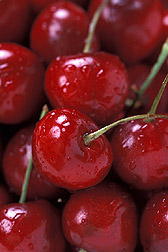
Fresh Cherries May Help Arthritis Sufferers


Arthritis hurts. But fresh cherries may help. Results of a preliminary study by ARS  (Agriculture Research Service a division of USDA) scientists and their university colleagues suggest that some natural compounds in plump, juicy Bing cherries may reduce painful arthritic inflammation. Eating cherries may also help lessen the severity of other inflammatory conditions, such as cardiovascular disease or cancer.

Cherries already have a reputation for fighting inflammation. So what's new about the ARS study?
"Our test is among the first to track anti-inflammatory effects of fresh Bing cherries in a controlled experiment with healthy volunteers," says chemist Robert A. Jacob, who led the investigation. Jacob is now retired from the ARS Western Human Nutrition Research Center in Davis, California.

In previous studies at other laboratories, scientists analyzed extracts from sweet or tart cherries in vitro to learn more about the fruit's potential health-promoting properties. In contrast to these test-tube experiments, the California study is apparently the first to test key inflammatory disease indicators, or markers, in blood samples from healthy volunteers who were fed precise amounts of fresh Bing cherries. Reported in a 2003 issue of the Journal of Nutrition, the California investigation paved the way for a recent followup study at the Davis center.

For more information on the benefits of cherries click HERE